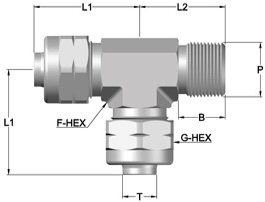
Compressed air systems rarely fail all at once. They lose capability quietly, through small restrictions that build across every meter of tubing and every connection point. Most performance complaints on the plant floor trace back to the pneumatic hose and fittings feeding the machine rather than the machine itself. The symptoms look mechanical. The cause is almost always flow related.
Correctly sized pneumatic hose and fittings deliver the volume and pressure a tool was designed around, which protects cycle times and reduces energy waste across the whole circuit. Selection is not a matter of matching thread size and moving on. Bore diameter, length, bend radius and internal geometry each decide how much of the compressor output actually arrives at the actuator.
Where Airflow Quietly Disappears in a Pneumatic Circuit
Restriction Begins Long before the Tool: Airflow losses start at the narrowest point in the line, and that point is usually a fitting rather than the hose itself. A quick coupler with a reduced internal bore can choke a correctly sized hose down to a fraction of its rated capacity. Air accelerates through the constriction, turns turbulent, and loses pressure it never recovers downstream.
Length and Bend Radius Add Up Faster than Expected: Every meter of hose carries a pressure penalty, and every tight bend multiplies it. A long coiled line left extended on the floor behaves nothing like the straight run used in the sizing calculation. In everyday plant practice, maintenance engineers routinely find machines starved of air by nothing more than an oversized coil and two elbows too many.
See also: Cremation Services Near Me for Families Facing Unexpected End-of-Life Costs
What Postponed Correction Costs a Production Line
Undersized Components Force the Compressor to Compensate: When flow is restricted, the usual response is to raise system pressure until the tool works again. That decision costs energy at the compressor every hour the plant runs, and it stresses seals, hoses and cylinder rod glands specified for a lower duty. The restriction stays in place. Only the bill changes.
Options Narrow as Wear Accumulates: Delay changes what a fix costs. A leaking connection corrected early is a fitting replacement. Left running for a season, the same leak drops line pressure enough to slow every actuator on the manifold, and the repair becomes a full circuit review. Air leaks are also the one loss that never announces itself with a fault code.
Gains That Follow Correct Hose and Fitting Selection
Full Bore Fittings Keep Flow Predictable: Matching the internal bore of every fitting to the hose bore keeps velocity stable and holds flow closer to the laminar range described by the Reynolds number, which lowers turbulence and pressure loss. Tools then reach rated torque or force on the first stroke. Cycle times tighten, scrap rates drop, and operators stop compensating with a second pass.
Stable Pressure Protects Downstream Equipment: Consistent supply pressure keeps valve shift times repeatable and stops cylinders from stalling mid stroke under load. Pneumatic hose and fittings rated correctly for the working pressure also hold their seal through the spikes that occur when a valve exhausts. Components that see steady conditions last longer and behave the same way on every shift.
Choosing between Hose Types and Connection Styles
Flexible Hose against Rigid Tubing: Rigid tube runs deliver the lowest pressure drop and suit fixed machine framework, while flexible hose earns its place wherever movement, vibration or frequent reconfiguration is involved. The trade off is real. Tube resists abrasion and holds its bore under pressure, and hose absorbs shock but adds internal friction and needs support against kinking.
Quick Couplers against Permanent Threaded Connections: Quick couplers pay for themselves where tools change often, and they cost flow every time they are used. A threaded push in fitting or a compression connection preserves bore and removes a leak path, at the price of tool change speed. High demand tools such as impact wrenches and grinders deserve the permanent connection.
Long Term Returns from a Well Specified Air Circuit
Correct Specification Lowers Lifetime Operating Cost: Air is the most expensive utility in most factories, and a circuit specified for its actual duty converts more of that energy into useful work. Leak free connections and correctly rated hose reduce the run hours the compressor logs each week. Feeding this data into a predictive maintenance schedule turns air quality into a measurable asset.
Material Choice Decides Service Life in Harsh Environments: Hose covers and fitting materials should be matched to the environment, not only the pressure. Polyurethane resists abrasion on drag lines, nylon holds shape under heat, and stainless fittings survive washdown chemicals that corrode brass within months. Selecting for the environment at the specification stage avoids replacement cycles that quietly repeat every year.
Warning Signs and Checks Worth Running on Every Circuit
Signals That Point to a Flow Problem: Most airflow faults reveal themselves before a machine stops, and the pattern rarely changes. Checking pneumatic hose and fittings during routine inspection catches restrictions while they are still cheap to correct. The following signs apply to almost any compressed air circuit, from a single bench tool to a multi station assembly cell.
- Tools that slow under load usually indicate insufficient flow rather than a worn motor.
- A pressure gauge reading taken at the tool inlet tells more than the gauge at the compressor.
- Audible hissing at a coupler under static pressure confirms a leak path that runs continuously.
- Hose that feels warm along its length signals excessive friction from an undersized bore.
- Cracked or stiff hose covers indicate material fatigue and a rising risk of sudden failure.
- Fittings reused after repeated disconnection often lose sealing accuracy and should be replaced.
Building an Air System That Holds Its Rating
The performance of any pneumatic machine is limited by the smallest bore in its supply line. Sizing the hose to the tool’s actual consumption, matching fittings bore for bore, and keeping runs short and straight recovers capability that no amount of extra compressor pressure can buy back. The gains show up within the first week of running.
Every month a restricted circuit stays in service, the plant pays for air it never uses and accepts cycle times below what the equipment can deliver. Correcting the specification is faster and cheaper than most teams expect. Arrange a technical review of your pneumatic hose and fittings to confirm the circuit matches the duty it carries.