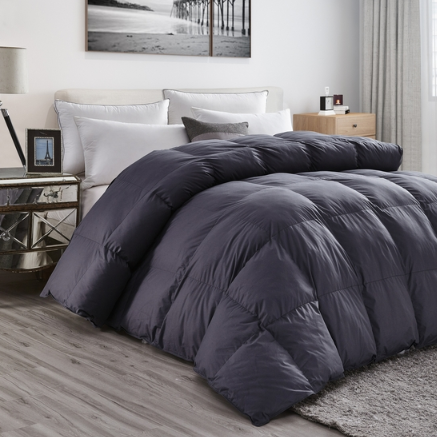
Plenty of people keep the same comforter on the bed from January to July and simply put up with the temperature swings. They kick it off through summer and pile extra blankets on top in winter, often waking more than they realize. A down comforter chosen for the right season and sleeper removes most of that nightly guesswork.
Warmth needs shift with the season and with the person under the covers. When fill weight and construction are matched to those needs, a down comforter holds body heat on cold nights and lets excess warmth escape on milder ones. That personal fit turns a comforter from a seasonal compromise into bedding that suits how you actually sleep.
One Comforter Weight Rarely Suits Every Sleeper or Season
Warm and Cool Sleepers Need Different Insulation: Two people in the same bedroom can need very different amounts of insulation, because metabolism and body size affect how much heat each person gives off. In everyday sleep medicine practice, clinicians regularly hear from patients who blame stress for broken nights when a bed that runs too warm is part of the problem.
Overheating Breaks Up Sleep and Wears Down the Fill: A comforter that is too heavy for the room works against the natural drop in core body temperature that helps you fall and stay asleep. The result is restless turning and brief waking through the night. Put off the change for another season and the problem compounds, since sweat moisture that reaches the down slowly flattens clusters and dulls their loft.
See also: Cremation Services Near Me for Families Facing Unexpected End-of-Life Costs
Four Comforter Weights Built for Different Months of the Year
Lightweight and Four-Season Designs for Milder Nights: A lightweight down comforter suits warm sleepers and summer months because it carries far less fill. Within one premium lineup, lightweight versions hold about 30 to 42 ounces of down, depending on size. A four-season design steps up to roughly 35 to 55 ounces, giving medium warmth to anyone who wants one comforter across most of the year.
All-Season and Heavy Winter Weights for Colder Rooms: An all-season comforter with roughly 50 to 70 ounces of fill suits bedrooms that stay cool for much of the year. Heavy winter designs push further, often to 65 to 95 ounces, for cold climates and drafty older homes. Couples who disagree on warmth often settle on the lighter weight and add a throw on the colder side.
Fill Details and Stitching That Control Warmth and Loft
Fill Power Measures Loft and Fill Weight Measures Warmth: Fill power measures how many cubic inches one ounce of down occupies, while fill weight is the total ounces of down inside the comforter. Higher fill power means larger clusters that trap more air per ounce. When a whole lineup shares a fill power of 750 or more, fill weight becomes the figure that separates a summer comforter from a winter one.
Baffle Box Construction Spreads Warmth Evenly: Baffle box construction uses thin fabric walls between the top and bottom layers, so down can reach full loft without drifting to the edges. Sewn-through stitching costs less but leaves thinner, cooler lines along each seam. Even coverage matters most during REM sleep, when the body regulates its own temperature less effectively and leans more heavily on bedding to stay comfortable.
Where Goose Down Outperforms Synthetic and Wool Fill
Down Delivers More Warmth for Its Weight: A down comforter delivers more warmth for its weight than synthetic or wool fill, and it lets moisture escape overnight. Synthetic alternatives cost less and wash easily at home, which suits anyone avoiding feathers, yet they tend to clump and feel heavier. Wool manages moisture nicely but lofts less. Down costs more upfront and needs careful cleaning, often by a professional.
Longer Service Life Lowers the Cost per Season: Quality down usually outlasts synthetic fill because its clusters spring back after years of nightly compression. Kept inside a duvet cover and aired out on dry days, a premium comforter can stay in service for many years. Spread across that span, its cost per season often falls below the price of replacing flattened synthetic comforters every few winters.
Choosing Warmth by Climate and Bedroom Temperature
Climate and Room Temperature Set the Starting Point: Local climate and bedroom temperature set the baseline warmth a comforter needs to provide. Many sleep experts suggest keeping the bedroom somewhere in the low to mid 60s Fahrenheit, so a room held in that range often pairs well with an all-season weight. Personal warmth preference and seasonal use then fine-tune the choice.
- Humid southern climates usually suit a lightweight or four-season weight for most of the year.
- Anyone who runs hot at night can size down one weight, since adding a throw is easier than shedding trapped heat.
- Cool sleepers in cold regions often keep a heavy winter comforter for the coldest months and swap to something lighter in spring.
- A down comforter certified to the Responsible Down Standard gives added confidence in how its fill was sourced.
Warmth Matched to Your Nights, Season by Season
The right comforter weight keeps you comfortable without the midnight shuffle of blankets, and that steadiness adds up across a year of sleep. Every season spent under the wrong weight costs rest and puts extra wear on good down. Check your bedroom temperature tonight and order the comforter weight that suits how you sleep.