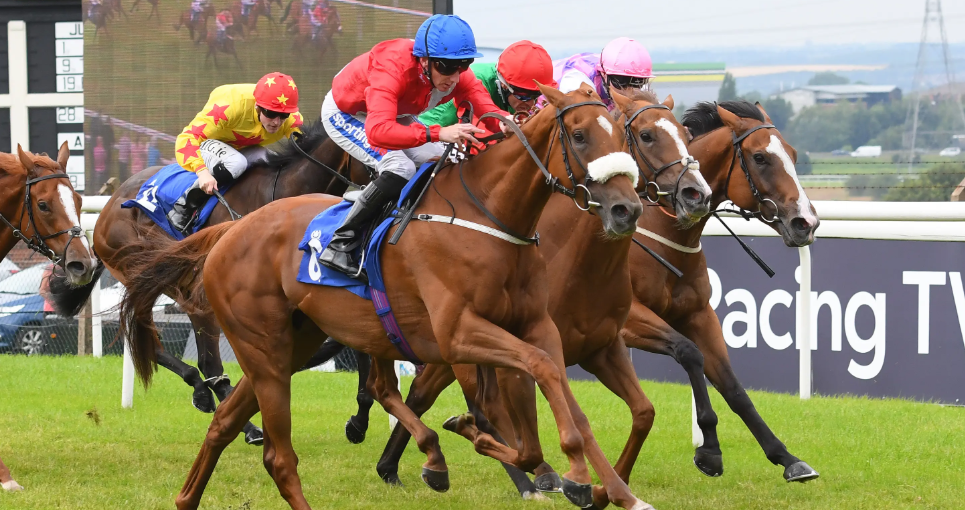
In crowded races, horses exhibit a blend of instinct and training. Their ability to navigate tight spaces relies on rigorous preparation and an understanding of herd dynamics. Sensory perception plays a vital role, as they must filter distractions to maintain focus. Additionally, the bond with their jockey fosters a crucial communication channel. Yet, how these elements intertwine to enhance performance in the chaos of a race remains a compelling exploration.
The Role of Training in Race Performance
Although many factors influence a horse’s performance in crowded races, training stands out as a critical determinant.
Effective training focuses on race strategy and performance enhancement, equipping horses with the skills to navigate competitive environments.
Trainers must foster adaptability, honing a horse’s instincts to respond swiftly to the chaotic dynamics of a race, ultimately unlocking the potential for success amidst intense competition.
See also: How Horses Build Mental Toughness
Understanding Equine Social Dynamics
While equine behavior is often instinctive, understanding the social dynamics among horses reveals how these interactions influence their performance in crowded races.
Herd behavior plays a crucial role, as horses often rely on their social hierarchy for guidance and reassurance. Dominant individuals may steer the group, while subordinates adapt to the dynamics, ultimately affecting their ability to navigate the competitive environment.
Sensory Perception and Spatial Awareness
As horses navigate crowded races, their sensory perception and spatial awareness become critical in determining their performance.
The cacophony of sounds and sights can induce sensory overload, challenging their ability to maintain focus. Effective spatial navigation allows them to gauge distances and avoid collisions, enhancing their agility.
This keen awareness is vital, enabling them to thrive in the chaotic environment of competitive racing.
The Jockey-Horse Connection in Crowded Environments
The connection between a jockey and their horse plays a crucial role in navigating the complexities of crowded racing environments.
Effective jockey communication fosters trust dynamics essential for decision-making amidst chaos. In these high-pressure situations, a jockey’s subtle cues and the horse’s responsive instincts synchronize, enabling them to maneuver through tight packs.
This bond ultimately enhances performance while ensuring both horse and rider feel empowered.
Conclusion
In the tumult of a crowded race, horses emerge as both dancers and warriors, navigating the chaotic rhythm with grace and instinct. Their training serves as a compass, guiding them through the storm, while social dynamics act as an invisible thread, weaving them into a cohesive tapestry of competition. The jockey, akin to a conductor, harmonizes this symphony of speed and agility, allowing each horse to shine brightly amid the frenzy, symbolizing resilience in the face of overwhelming odds.