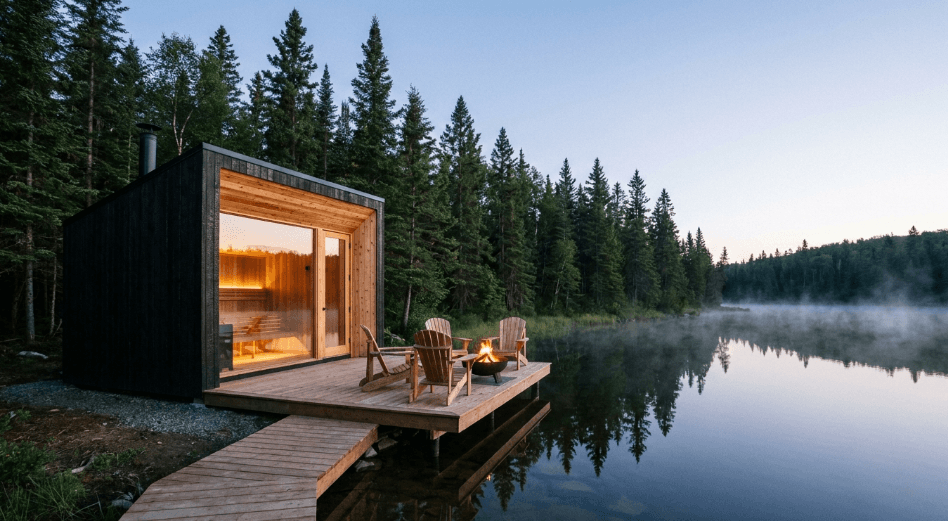
Two installation choices decide whether an outdoor sauna project goes smoothly or stalls halfway through: the heater’s power requirement, since a traditional stove typically needs a dedicated 240-volt circuit while an infrared panel system runs on standard 120-volt household power, and the foundation type, whether that is a compacted gravel pad, a poured concrete slab, or an existing deck. Get either one wrong for the site and either an electrician has to make a second visit or the pad settles unevenly within a season. Clearances to fences, walls, and combustible surfaces are the third variable, and they differ enough between a wood-fired stove and an infrared cabin that heater choice effectively decides how close the sauna can sit to a property line.
Traditional Stove Versus Infrared: The Electrical Comparison
A traditional electric stove sized for a small outdoor cabin, typically 6 to 9 kilowatts for a two to four person space, draws enough current that it needs a dedicated circuit, commonly rated between 30 and 50 amps at 240 volts depending on the exact heater model. That circuit has to run from the main panel to the sauna, buried in conduit if it crosses open yard, and terminate at a disconnect switch mounted within sight of the heater, which most electrical codes require for outdoor equipment of this size. Wood-fired stoves skip the electrical circuit entirely, trading it for a chimney, a supply of dry, seasoned wood, and more hands-on attention during the warm-up period.
Infrared panel systems are the lighter installation of the three by a wide margin. Most compact outdoor infrared cabins are built around a standard 120-volt, 15 or 20 amp circuit, close to what a space heater or a window air conditioner draws, and some can run off a properly rated outdoor-grade extension from an existing exterior outlet if the run is short and that outlet is not already shared with other heavy loads. That difference is a large part of why infrared has become the default recommendation for small lots, rental properties, and anyone who wants to avoid hiring an electrician at all.
Gravel Pad Versus Concrete Versus Deck
A compacted gravel pad, typically four to six inches of crushed stone over a leveled base, drains well and is the standard choice under barrel saunas, since a curved shell does not need the same dead-flat surface a cabin’s square floor requires. It is also the cheapest option to build and the easiest to redo if the sauna ever gets moved to a different spot in the yard. A poured concrete slab or a paver pad gives a firmer, more level surface that suits a full-floor cabin sauna better, particularly a heavier model with a traditional stove, and it holds up better in regions with freeze-thaw cycles that can shift a gravel base over a few winters. An existing wood or composite deck can work as a base too, provided it is rated for the added weight and the sauna’s footprint does not block any required clearance, though decking under a wood-fired stove needs extra attention to ember and heat exposure that a gravel or concrete pad does not.
Clearances That Differ by Heater Type
Wood-fired stoves carry the strictest clearance requirements of the three heater types: a common minimum is roughly three feet from the stove body to any unprotected combustible surface, along with a chimney that clears the roofline by the margin local code specifies and stays a set distance from property lines and neighboring structures. Electric traditional stoves need less clearance to combustibles than wood-fired units but still require whatever gap the manufacturer states around the heater guard, typically measured in inches rather than feet. Infrared panels run cool enough on the surface that clearance requirements are minimal, generally just enough space for airflow and to avoid direct contact, which is part of why infrared cabins can sit tighter against a fence or wall than a traditional stove setup can.
What Does an Inspector Actually Check?
Outdoor electrical equipment near a heat and moisture source draws close attention from inspectors, and most jurisdictions require ground fault protection on the sauna’s circuit regardless of heater type, sized so it does not nuisance-trip during normal use. The disconnect switch mentioned above needs to sit within sight of the heater and carry an outdoor, wet-location rating if it is mounted outside the structure itself. Skipping the permit step to save time is the most common reason a homeowner ends up redoing a circuit later.
Getting the Sequence Right
Site prep problems are almost always sequencing problems. Pouring a pad before confirming the exact heater’s amperage and disconnect location, or before an electrician has weighed in on where conduit needs to enter the structure, is the most common way a project gets delayed or reworked. The order that avoids rework is straightforward: confirm heater type and wattage first, have an electrician quote and schedule the circuit second, pour or set the pad third with any conduit sleeves already accounted for, and only then have the sauna delivered. For buyers still deciding between traditional and infrared models before committing to a site plan, the team at SweatDecks lists current heater specifications and power requirements alongside other outdoor sauna retailers, which is useful for pricing out the electrical work before the structure itself arrives.
What the Evidence Says About Choosing Traditional Heat
Buyers weighing the extra electrical cost of a traditional stove sometimes want to know whether the higher, steam-capable heat is worth the added installation complexity. Most of the long-term research on sauna bathing and health comes from traditional Finnish-style sauna use rather than infrared. A systematic review of clinical studies on regular dry sauna bathing reported associations with improved cardiovascular and respiratory markers across the trials it covered, and a broader 2023 review in Mayo Clinic Proceedings summarized similar cardiovascular associations alongside other lifestyle factors that tend to travel with frequent sauna use, such as physical activity and diet. A separate review of the overall evidence base reached comparable conclusions about cardiovascular associations tied to traditional sauna bathing specifically. None of this settles the traditional-versus-infrared decision on its own, since infrared simply has a much smaller and shorter-term evidence base rather than evidence against it, but it does explain why buyers who read the research closely tend to lean toward the heater type with the deeper installation requirements.
Frequently Asked Questions
What size electrical circuit does an outdoor sauna heater need? A traditional stove in the 6 to 9 kilowatt range typically needs a dedicated 240-volt circuit sized between 30 and 50 amps. Infrared panel systems usually run on a standard 120-volt, 15 to 20 amp circuit instead.
Does an outdoor sauna need a concrete foundation? Not always. A gravel pad works well for many barrel and cabin saunas, while poured concrete or pavers suit a full-floor cabin better, especially with a heavier stove.
How much clearance does a wood-fired sauna stove need? A common minimum is around three feet from the stove to any unprotected combustible surface, plus a code-compliant chimney with proper roofline clearance.
Can I install an outdoor sauna myself? The structure itself often can go up without a contractor. The electrical circuit almost always needs a licensed electrician to meet code and pass inspection.
Does an outdoor sauna need GFCI protection? Yes, in most jurisdictions. Ground fault protection sized for the heater load is standard on outdoor sauna circuits, and an inspector will typically check for it before signing off.
References
- Clinical Effects of Regular Dry Sauna Bathing: A Systematic Review, Evidence-Based Complementary and Alternative Medicine, 2018
- Does the Combination of Finnish Sauna Bathing and Other Lifestyle Factors Confer Additional Health Benefits? A Review of the Evidence, Mayo Clinic Proceedings, 2023
- Cardiovascular and Other Health Benefits of Sauna Bathing: A Review of the Evidence, Mayo Clinic Proceedings, 2018