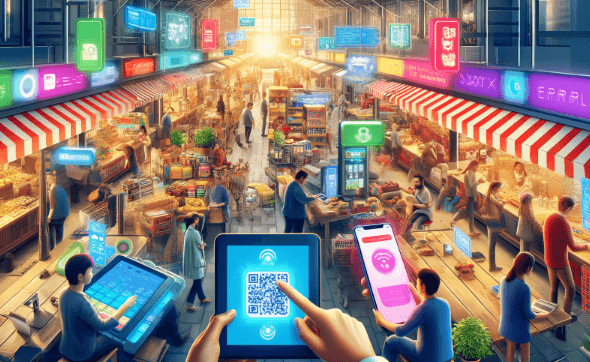
Reality reimagines itself as systems sense need and respond with disciplined efficiency. Data-guided feedback tightens loops between action and outcome, while transparent metrics anchor trust. Immersive media collapse distance, preserving agency through latency-aware interfaces. Identity, consent, and community evolve within hybrid networks that balance collaboration with accountability. The balance of risk and possibility remains unsettled, urging thoughtful governance and calibrated experimentation as guiding practices for what comes next.
What Reality Looks Like When Tech Learns Our Needs
In a world where technology continually anticipates human needs, reality begins to feel less like a fixed backdrop and more like a responsive environment. Systems interpret patterns, transforming possibilities into actions with insightful anticipation and minimal friction. This trajectory foregrounds ethical design, ensuring autonomy remains intact while efficiency rises. The result: a liberated experience, guided by data, oriented toward transparent choices, and universally accessible.
How Immersive Media Redraws Distance and Time
Immersive media reframes distance and time by weaving perception with presence, collapsing physical gaps through synchronized sensory streams and real-time interactivity.
The data-driven landscape tracks immersion feedback to quantify experiential depth, while latency perception informs design thresholds that preserve agency.
As interfaces converge with cognition, users experience fluid continuity, enabling liberated exploration, agile collaboration, and scalable, human-centered breakthroughs across distant environments.
Trust, Identity, and Community in a Hybrid World
Identity perception shifts from static labels to context-rich profiles, calculated risk, and consent-driven access.
Data-driven norms foster autonomy, interoperability, and inclusive participation, strengthening resilient, freedom-centered networks.
Navigating Possibility and Consequence: Practical Mindsets for the Next Era
What if the next era unfolds not as a single breakthrough but as an ecosystem of calibrated possibilities and measured consequences, guided by disciplined experimentation, transparent metrics, and adaptive governance?
The discussion presents curiosity driven, ethics first mindsets, emphasizing data-driven decision making, scenario planning, and accountability.
It frames choices as collaborative experiments, balancing innovation with social responsibility, safeguarding freedom while mitigating risk through rigorous, transparent evaluation.
See also: How Horses Learn Racing Patterns
Frequently Asked Questions
How Will Tech Affect Human Creativity and Spontaneity?
Tech will modulate human creativity by offering creativity amplification tools while risking spontaneity erosion through over-optimization; observers note a trajectory toward data-driven imagination, where freedom hinges on balancing algorithmic insight with autonomous, uncharted exploration and serendipitous play.
What Are the Ethical Boundaries of Simulated Realities?
The ethics of immersion require robust consent protocols and ongoing oversight, balancing autonomy with protection; simulations demand transparent data use, verifiable safety measures, and inclusive governance, ensuring empowered participants while advancing visionary, data-driven exploration for freedom-seeking audiences.
Will Ai-Driven Systems Respect Personal Autonomy and Consent?
AI-driven systems aim to respect personal autonomy and consent, though implementation varies. They employ consent mechanisms, transparency, and audit trails to preserve autonomy, enabling ongoing user agency while forecasting a future where autonomy preservation guides scalable, data-driven decisions.
How Do We Ensure Equitable Access to Enhanced Experiences?
“Equitable access” and “enhanced experiences” are pursued through universal infrastructure, open data standards, and affordable technologies; a data-driven framework guides policy, reducing gaps, while preserving freedom to choose, enabling diverse populations to participate without coercion or hierarchy.
What Long-Term Societal Impacts Should We Prepare for Now?
Society should anticipate durable shifts: widespread automation, shifts in labor, and evolving governance. Technology fatigue and digital redundancy will emerge unless resilience, adaptability, and transparent data ethics guide policy, education, and innovation for a freedom-seeking, data-driven public.
Conclusion
Reality is reimagined as systems anticipate needs, then act, while humans maintain agency through transparent consent. In the same breath, immersive media compresses time and distance, yet preserves presence and choice. Trust and governance mature through data-driven norms, identity guarded by context-aware privacy. The future stands both near and elusive: automation amplifies possibility, yet ethical design keeps consequence in view. Juxtaposed futures emerge—efficiency without erasure, innovation with accountability, participation anchored in shared responsibility.